
What if the story of Jesus' origins was shaped as much by what was silenced as by what survived?
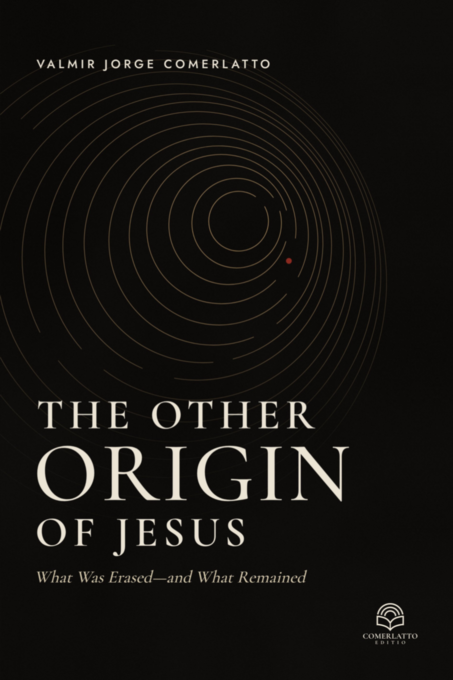
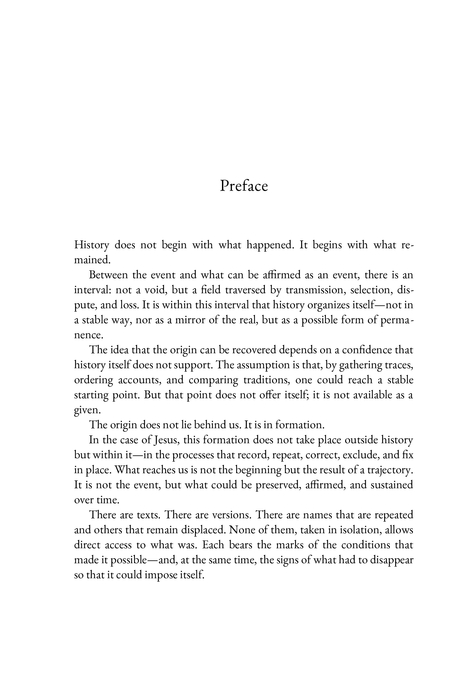
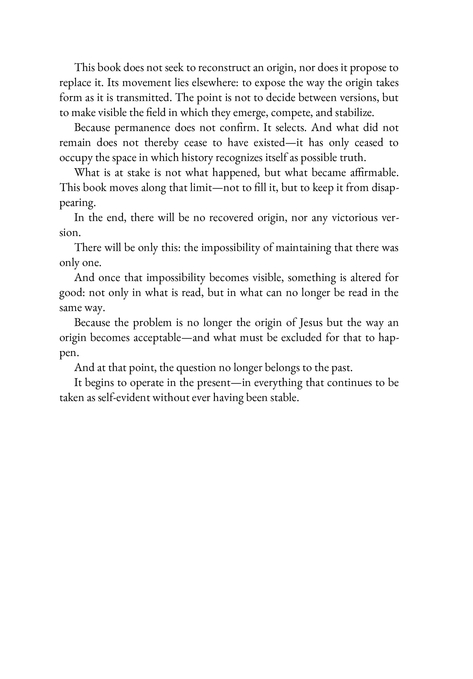
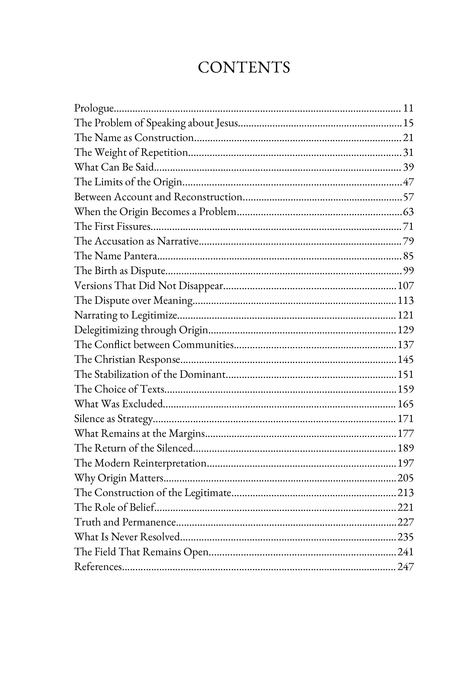
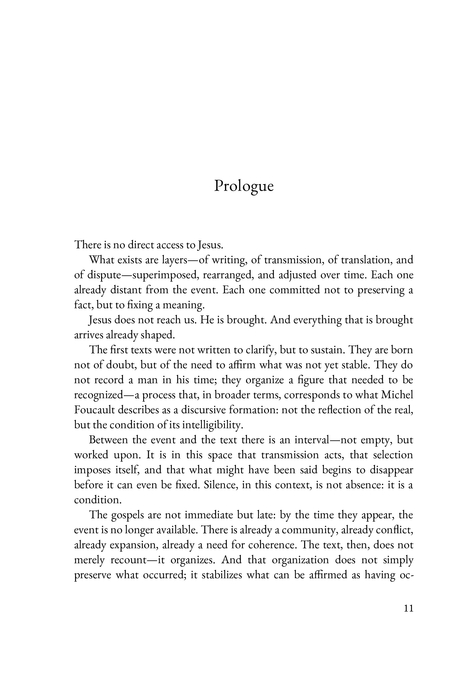
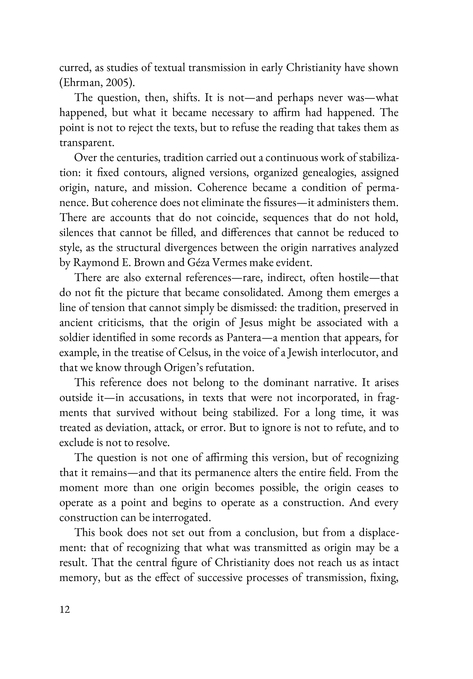
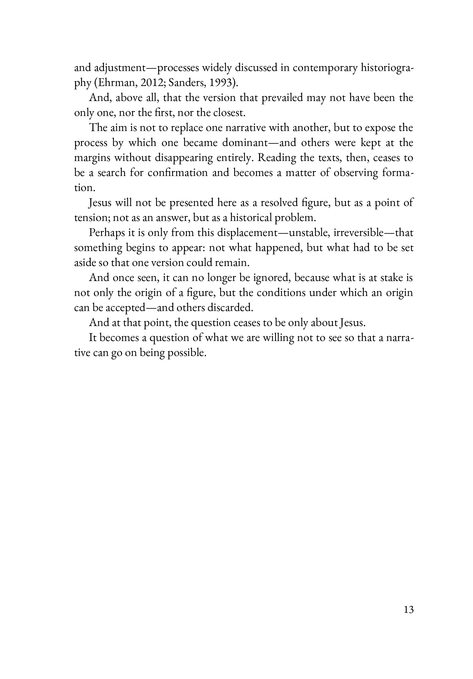
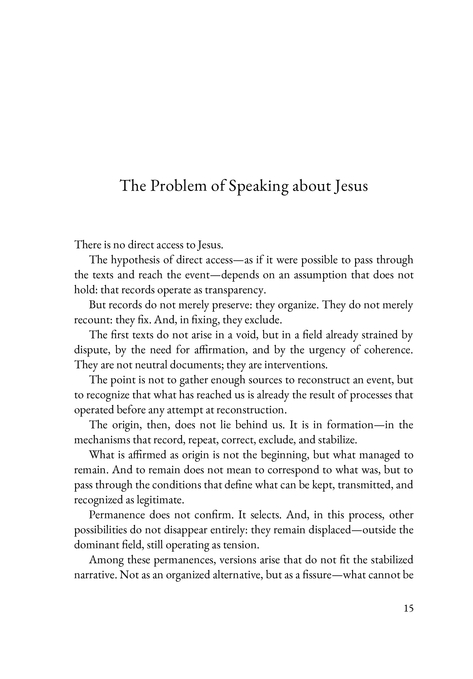
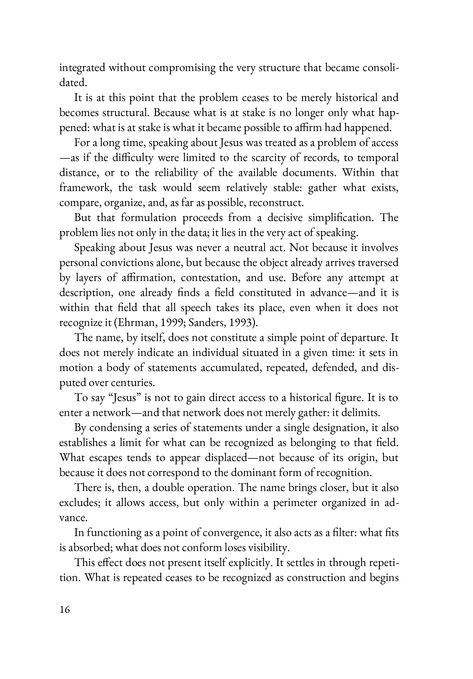
The Other Origin of Jesus does not claim to uncover a hidden truth, nor does it offer a rival biography. Its inquiry moves elsewhere: toward the process by which an origin takes form as it is transmitted. From the divergent birth narratives of Matthew and Luke to the hostile accusations preserved outside the canon, Valmir Jorge Comerlatto follows how early communities remembered, corrected, selected, and excluded, until one version became affirmable and the others were pushed to the margins.
In dialogue with scholars such as Raymond E. Brown, James D. G. Dunn, and Bart D. Ehrman, the book examines the enigmatic name Pantera not as proof, nor as an alternative, but as a remainder: what could not be removed without leaving a trace. Its guiding insight is as simple as it is unsettling: permanence does not confirm; it selects.
Written in a restrained, rigorous, and aphoristic style, this is neither a devotional work nor an attack on faith. It is a historical and philosophical essay on how narratives acquire authority, and on what must be excluded for an origin to become acceptable.
In the end, there is no recovered origin and no victorious version. There is only the impossibility of maintaining that there was only one, and a question that no longer belongs to the past.
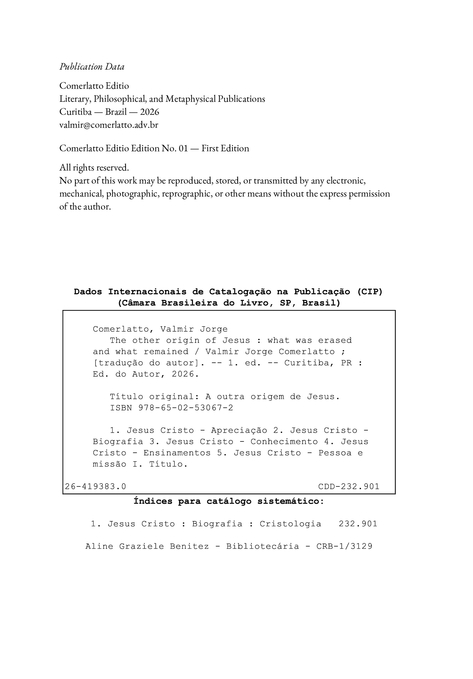
| ISBN | 9786502530672 |
| Seitenanzahl | 250 |
| Ausgabe | 1 (2026) |
| Format | 16x23 (160x230) |
| Einband | Taschenbuch mit Klappen |
| Farbe | Schwarz-Weiß |
| Papiertyp | Offset 80g |
| Sprache | Englisch |
Haben Sie Beschwerden über dieses Buch? Sende eine Email an [email protected]






Klicken Sie auf Anmeldung und hinterlassen Sie Ihren Kommentar zum Buch.