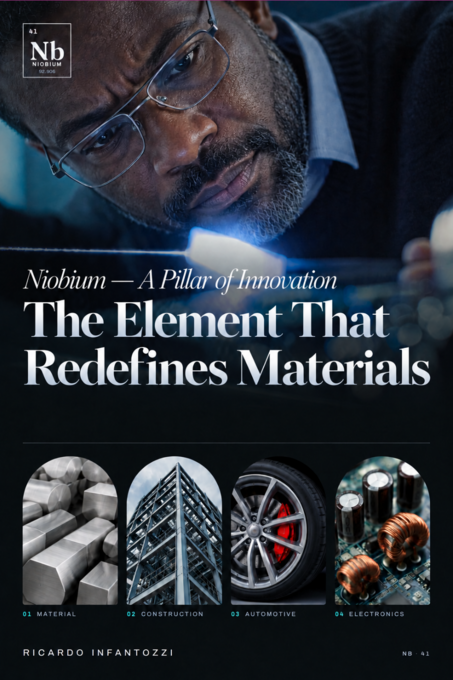
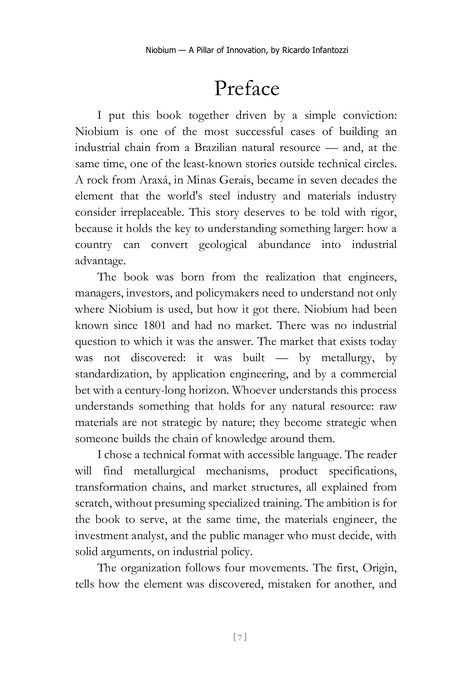
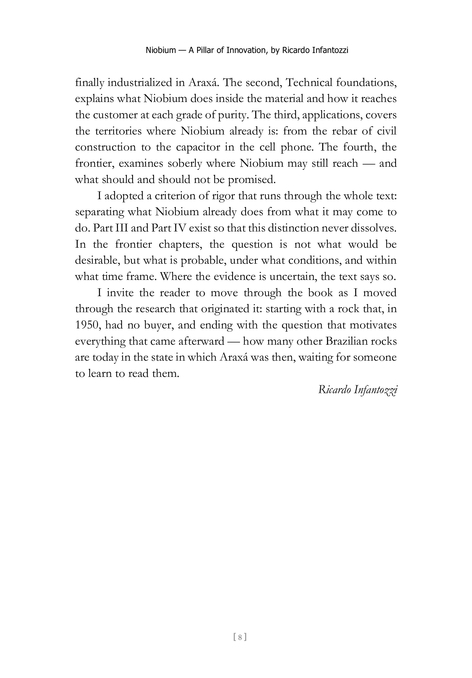
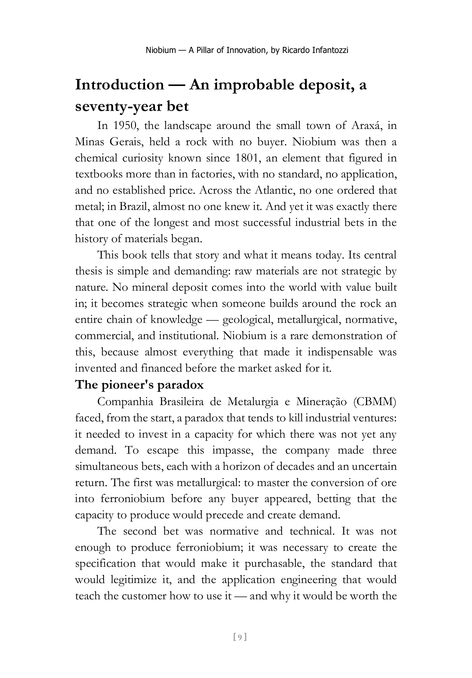
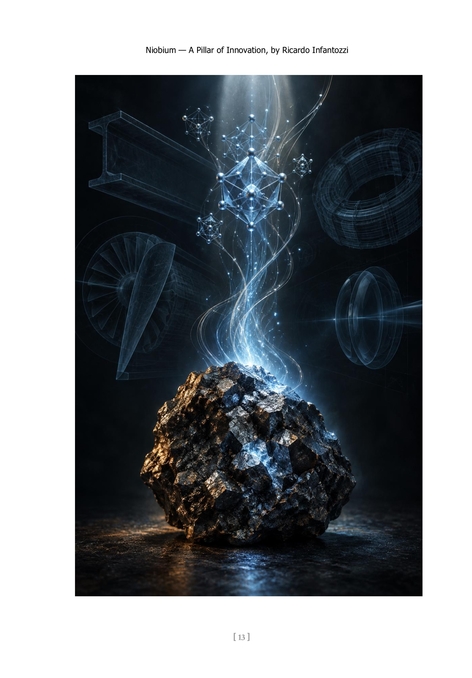
In 1950, in the countryside of Minas Gerais, there was a rock in Araxá with no buyer. Niobium, a chemical element known since 1801, had no market, no technical standard, and no established price. It was a catalog curiosity, material for museums and scientific papers, with no industrial destination in sight.
Seventy years later, that same rock supports skyscrapers, subsea pipelines, aircraft turbines, and MRI magnets. The element nobody needed became irreplaceable in the most demanding materials of the modern economy.
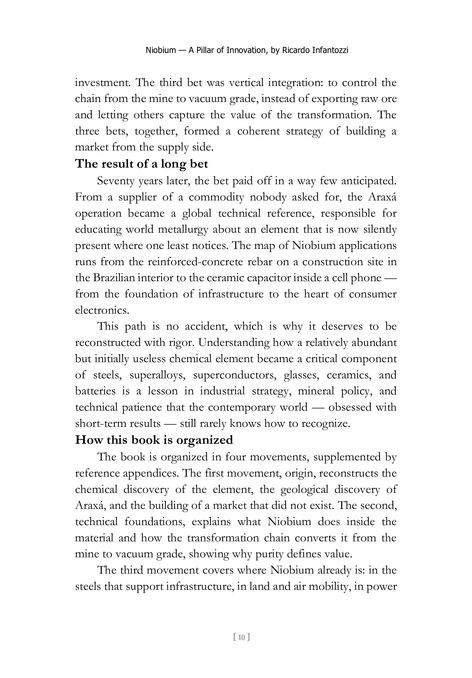
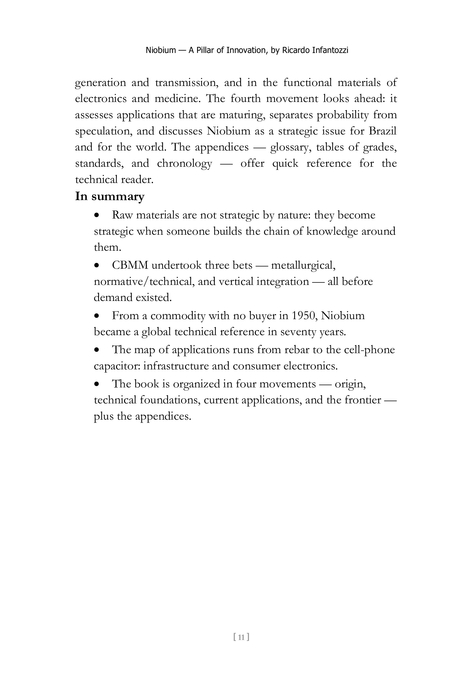
How did that happen? That is the question this book answers. The thesis running through its pages is straightforward: raw materials are not strategic by nature — they become strategic when someone builds an entire chain of knowledge around them.
| Seitenanzahl | 142 |
| Ausgabe | 1 (2026) |
| Format | 16x23 (160x230) |
| Einband | Taschenbuch mit Klappen |
| Farbe | Farbig |
| Papiertyp | Estucado Mate 90g |
| Sprache | Portugiesisch |
Haben Sie Beschwerden über dieses Buch? Sende eine Email an [email protected]

Klicken Sie auf Anmeldung und hinterlassen Sie Ihren Kommentar zum Buch.