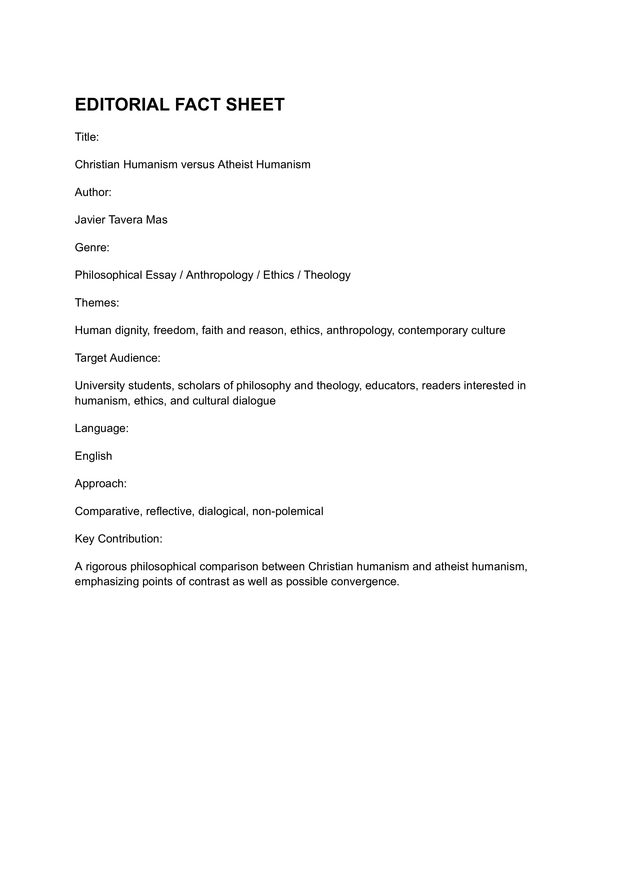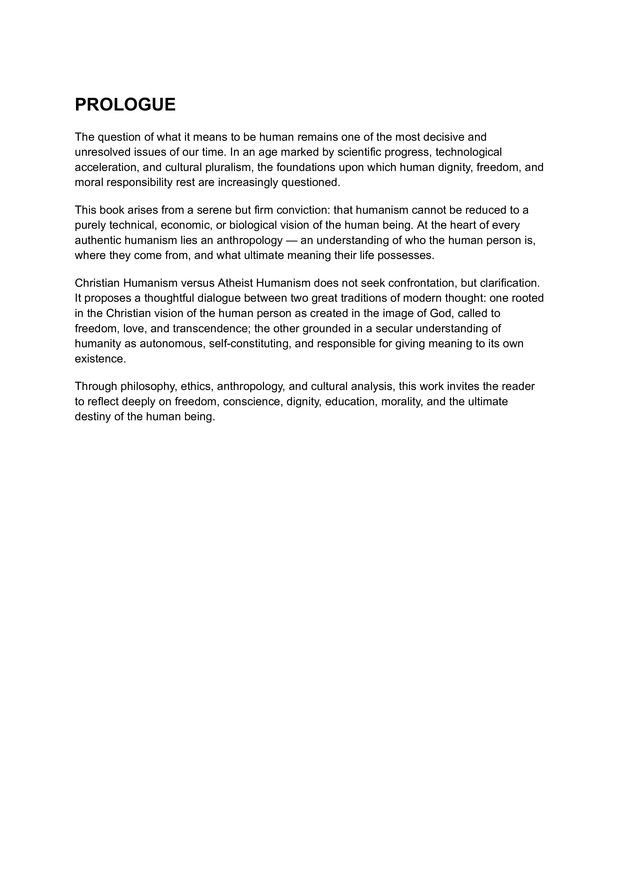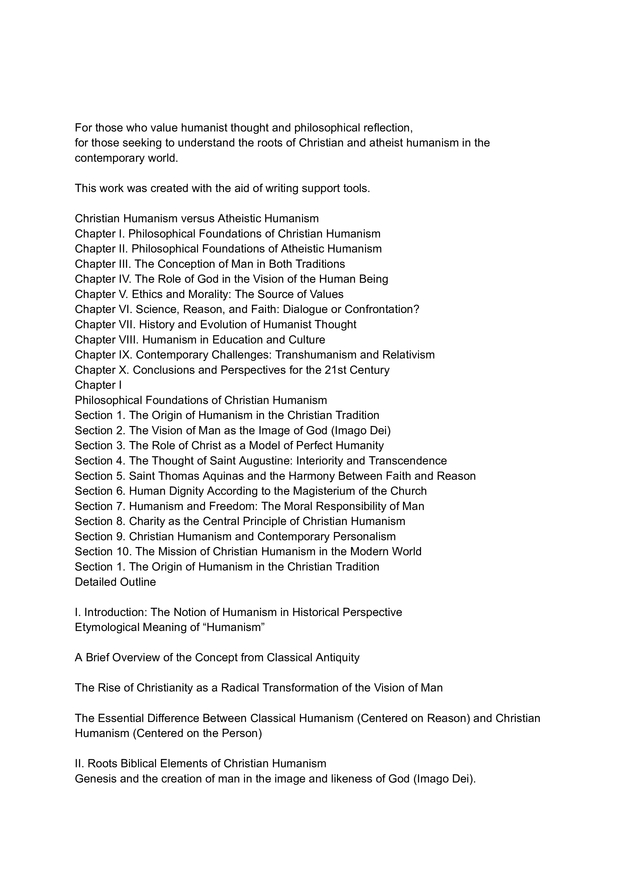
This book offers a comprehensive philosophical analysis of Christian humanism and atheist humanism, exploring their historical origins, anthropological foundations, ethical principles, and contemporary implications.
The first chapters examine the biblical, classical, and medieval roots of Christian humanism, highlighting the Christian conception of the human person as a being endowed with dignity, freedom, reason, and a transcendent vocation. Special attention is given to the synthesis of faith and reason, particularly in the thought of Saint Thomas Aquinas, and to the role of freedom as a central axis of Christian anthropology.
Subsequent chapters analyze modern and contemporary forms of atheist humanism, focusing on their understanding of autonomy, determinism, ethics, and meaning. The work contrasts these perspectives with the Christian vision while recognizing shared concerns such as justice, human rights, and the pursuit of the common good.
The final chapters explore areas of dialogue in politics, education, science, bioethics, and global culture, proposing a possible synthesis based on care for the person, ethical responsibility, and cooperation for a shared human horizon.
| Number of Pages | 76 |
| Edition | 1 (2025) |
| Format | A4 (210x297) |
| Binding | Hardcover |
| Color | Colored |
| Paper Type | Coated Silk 150g |
| Language | English |
Do you have complaints about this book? Send an email to [email protected]
Click Login to leave your comment on the book.