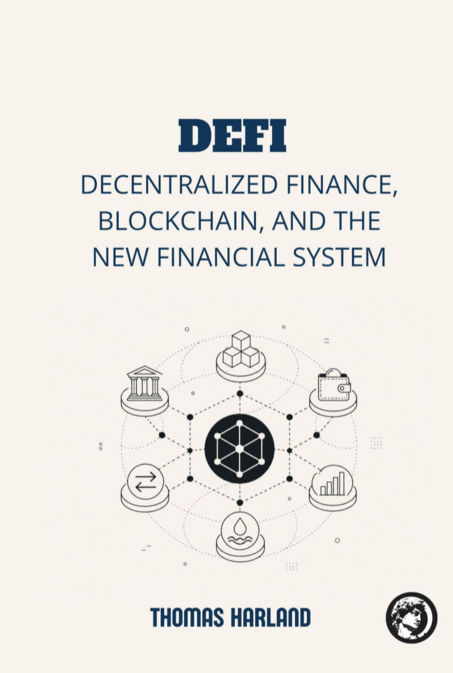
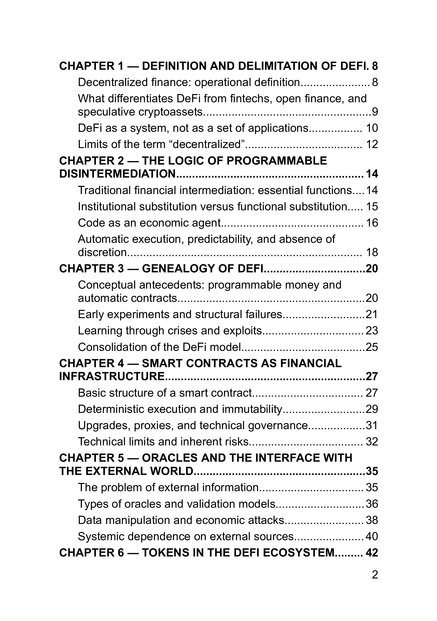
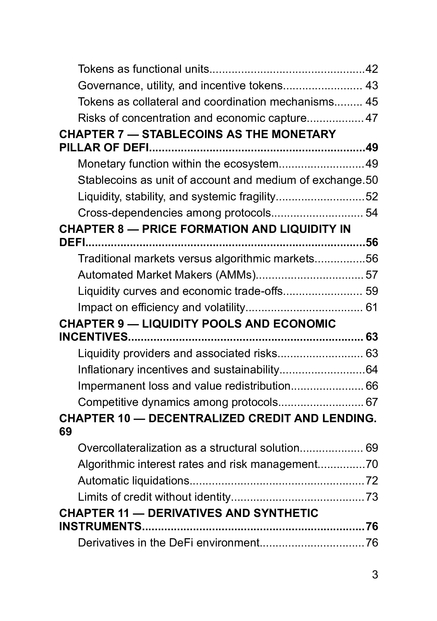
This work provides an in-depth analysis of decentralized finance (DeFi) as a technical, economic, and historical phenomenon. DeFi is examined as a structural reorganization of financial intermediation, where code, incentives, and distributed governance partially replace traditional institutions without fully eliminating them. The book explores smart contracts, algorithmic liquidity, decentralized credit, stablecoins, derivatives, on-chain governance, and integration with the real economy, consistently addressing technical risks, systemic fragilities, and macroeconomic implications.
Beyond operational mechanics, the analysis advances into conceptual territory, discussing technological neutrality, architected trust, code as norm, monetary sovereignty, and the limits of automation. DeFi is treated as an ongoing historical experiment that exposes both transformative potential and structural constraints, including power concentration, technical dependencies, speculative cycles, and regulatory challenges.
Aimed at readers seeking rigorous understanding of the crypto-financial ecosystem, the book bridges economics, technology, law, and political theory, offering a critical perspective on the future of finance in an era shaped by programmable infrastructures, hybrid governance, and expanding digital financialization.
| Number of Pages | 202 |
| Edition | 1 (2026) |
| Format | A5 (148x210) |
| Binding | Paperback with Flaps |
| Color | Black and White |
| Paper Type | Offset 80g |
| Language | English |
Do you have complaints about this book? Send an email to [email protected]


Click Login to leave your comment on the book.